
About 30 minutes
None. Makeup can be worn the same day
Visible immediately
Every 4 weeks, aligned to the skin’s natural turnover cycle
None required
Chemical peels and facials, often booked as an add-on
Dermaplaning is the treatment people are most skeptical about until they have had one. It sounds like shaving; the at-home tools are everywhere, and it is not obvious why you would pay for something that appears so simple.
The difference is what is actually being removed. At Viva Vitality MedSpa in Lakeland, FL, dermaplaning uses a sterile surgical blade held at a controlled angle to lift away the outermost layer of dead skin along with the fine vellus hair on the surface. That layer is what makes skin look dull and what stops products from absorbing properly, and removing it is not something a razor does.
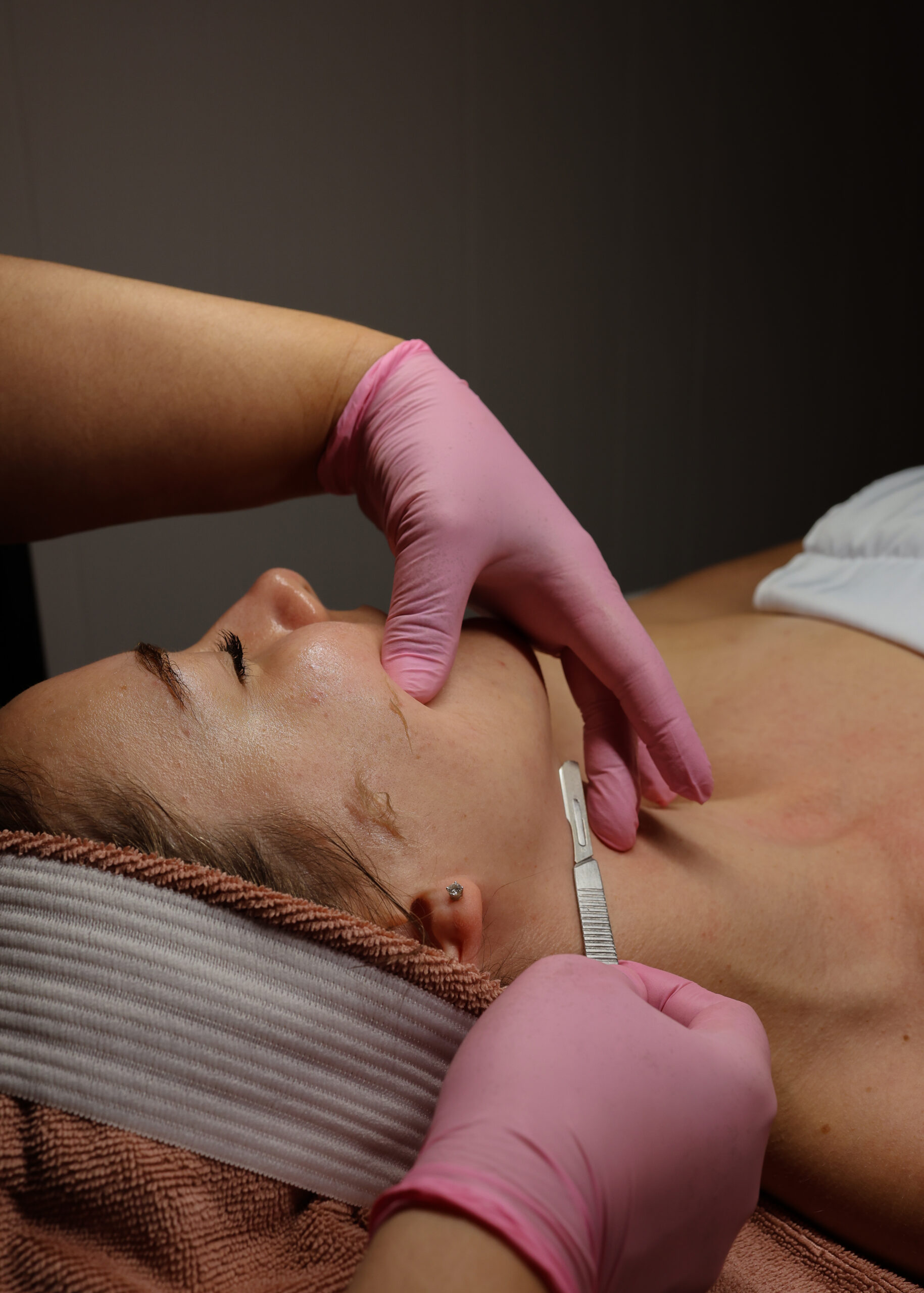
Dermaplaning is a manual exfoliation treatment performed with a sterile surgical blade. The blade is drawn across the skin at a shallow angle, removing the stratum corneum, which is the outermost layer of dead cells, together with the fine vellus hair often called peach fuzz.
That stratum corneum is the reason the treatment works. As dead cells accumulate, they scatter light rather than reflecting it, which is what makes skin look dull, and they also sit between your skincare products and the living skin underneath. Removing that layer is what produces the immediate change in brightness and why products applied afterward absorb better.
It is a physical exfoliation rather than a chemical one, which makes it suitable for people who cannot tolerate acids and for skin that reacts to more aggressive treatment. There is no heat, no downtime, and no recovery period.
Your provider begins by cleansing the skin thoroughly, since the blade needs to move across a dry, clean surface to work correctly. The skin is then held taut section by section while the blade is drawn across it at roughly a 45-degree angle.
Angle and pressure are what separate this from shaving, and they are the reason it is performed by a trained aesthetician rather than attempted at home. Too steep and the blade catches; too shallow and it removes the hair without the dead skin layer, which is most of the benefit. Getting it right takes practice on faces that vary considerably in texture and contour.
The whole treatment takes about 30 minutes and is comfortable throughout. Most people describe the sensation as a light scraping, similar to a soft brush moving across the skin. A serum or moisturizer is applied afterward, and this is the point at which product absorption is at its best.
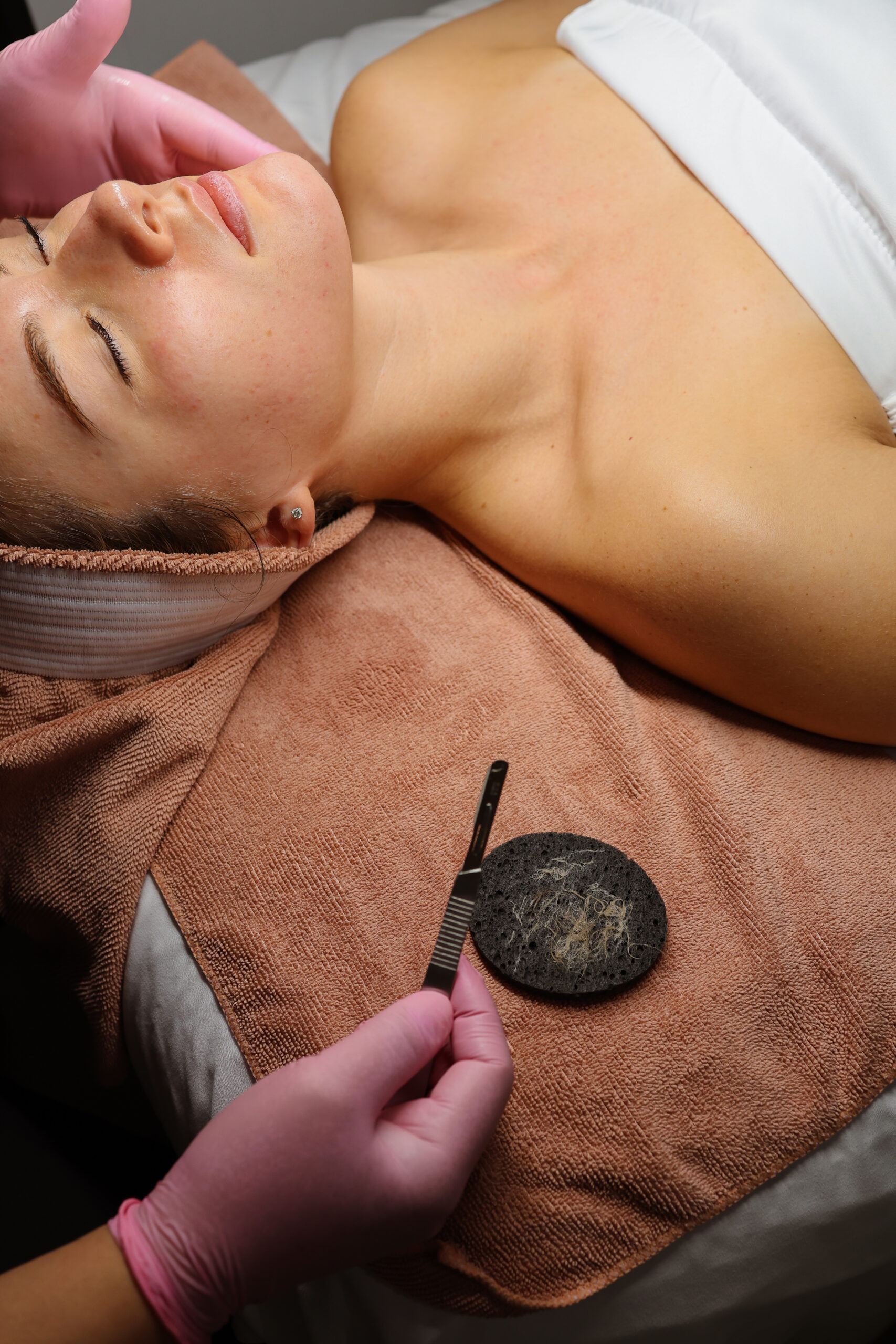
Dermaplaning is the treatment people book before an event and then keep booking. It does one thing well, and it does it immediately, which is a reasonable description of what most patients actually want from a facial service.
Removing the dull outer layer produces a visible change the same day, with no waiting period and no downtime.
Foundation sits on the skin rather than catching on fine hair and flaking, which is the benefit patients notice most in daily use.
Serums and moisturizers reach living skin rather than sitting on a layer of dead cells, so your existing routine works harder.
Vellus hair is lifted away along with the dead skin, and it grows back with the same texture rather than coarser.
A physical exfoliation with no acids and no heat, which suits people who react to chemical treatments.
Clearing the surface first improves how well a facial or peel performs, which is why it is frequently booked alongside another treatment.
Dermaplaning is performed on the face and neck, working around the contours section by section. Areas with coarse or terminal hair are avoided, which is why it is not used on the brows or hairline.
The standard treatment, working systematically across every section.
One of the areas where dead skin buildup is most visible under makeup.
The largest area and where vellus hair tends to be most noticeable in daylight.
Treated carefully, and a common reason patients book in the first place.
Addressed with attention to contour, avoiding any coarse hair.
Follows the natural line of the face where texture often changes.
Where fine hair catches light most obviously.
Treated to smooth texture and clear buildup around the nostrils.
Treated gently, as the skin here is thinner than elsewhere on the face.
Frequently included, since it shows texture change as readily as the face.
Dermaplaning works at the surface, which defines both what it does well and where it stops. Concerns rooted in the surface layer respond immediately; anything structural needs a different treatment.
The clearest indication, since dead cell buildup is what dulls the complexion.
Smooths the surface so skin both looks and feels different immediately.
Removes the fine hair that catches light and traps makeup.
Addresses soft hair across the face without affecting how it regrows.
Clears the layer that accumulates faster as cell turnover slows with age.
Removes flaking that moisturizer alone sits on top of.
One of the most common practical complaints, and one dermaplaning resolves directly.
Clears the barrier between your products and the skin beneath.
Improves how evenly light reflects, though pigment itself needs a targeted treatment.
Reduces surface buildup contributing to congestion.
Softens their appearance by smoothing the surface, without treating the line itself.
The reason a great many patients book, and the treatment suits it because results are immediate.
Dermaplaning suits most skin types, including sensitive skin that reacts badly to acids or heat. It is a good option for anyone wanting brighter skin without downtime, and particularly for patients who have found their skincare products stopped seeming to work.
There are situations where it should be avoided, and being specific about them matters more than it might seem. Dermaplaning is not appropriate over active breakouts or cystic acne, since drawing a blade across inflamed skin can spread bacteria and worsen it. It should also be avoided during a rosacea flare, over eczema or psoriasis patches, on any open lesion or wound, and during a cold sore outbreak.
If you have taken isotretinoin recently, wait until you are cleared, as skin remains fragile for some months afterward. Coarse or terminal hair is also a reason to choose a different hair removal method, since dermaplaning is designed for fine vellus hair only. Your suitability is confirmed before treatment begins, and if it is not right for you today you will be told so rather than treated anyway.
The appointment takes about 30 minutes from start to finish. Your skin is cleansed thoroughly and dried completely, since the blade needs a clean, dry surface to work against.
Your aesthetician then works across the face section by section, holding the skin taut and drawing the blade at a controlled angle. It is comfortable throughout, and most people describe it as a light scraping rather than anything sharp. There is no numbing and nothing to prepare for.
Afterward, the skin is noticeably smoother to the touch straight away. A serum and moisturizer are applied, and this is when absorption is at its best. Mild redness sometimes appears and settles within a few hours. You can wear makeup and return to normal activity immediately, though skin will be more sensitive to sun for several days.
There is very little to do either side of a dermaplaning appointment, which is part of the appeal. The points below are the ones that make a difference.
The immediate smoothness and brightness typically last around three to four weeks, which corresponds to the skin’s natural cell turnover cycle. As new cells reach the surface and the old ones accumulate again, the dullness gradually returns.
This is why treatment is usually scheduled monthly rather than as a one-off. Vellus hair regrows at the same fine texture it had before, which is worth stating plainly since the belief that it grows back coarser is the second most common concern after the shaving question.
Dermaplaning clears the surface, which makes almost everything applied afterward work better. That is the reason it is so often booked as an add-on rather than only as a standalone treatment.
At-Home Tool or Razor | Professional Dermaplaning | |
What is removed | Vellus hair only | Vellus hair plus the stratum corneum |
Blade | Consumer blade, often reused | Sterile surgical blade, single-use |
Angle and pressure | Whatever you manage in a mirror | Controlled angle applied by a trained aesthetician |
Effect on dullness | Little, since the dead skin layer stays | Immediate, because that layer is what dulls the skin |
Risk | Nicks, irritation, uneven results, spreading bacteria over breakouts | Assessed for suitability before treatment begins |
Dermaplaning looks simple, which is exactly why technique matters. The difference between a treatment that brightens the skin and one that only removes hair comes down to blade angle and pressure across a face that changes contour constantly.
Viva Vitality MedSpa offers dermaplaning to patients throughout Lakeland and the surrounding Central Florida communities. Our South Florida Avenue location sits between Lake Hollingsworth and Lake Morton, within easy reach of Plant City, Winter Haven, and the Tampa area.
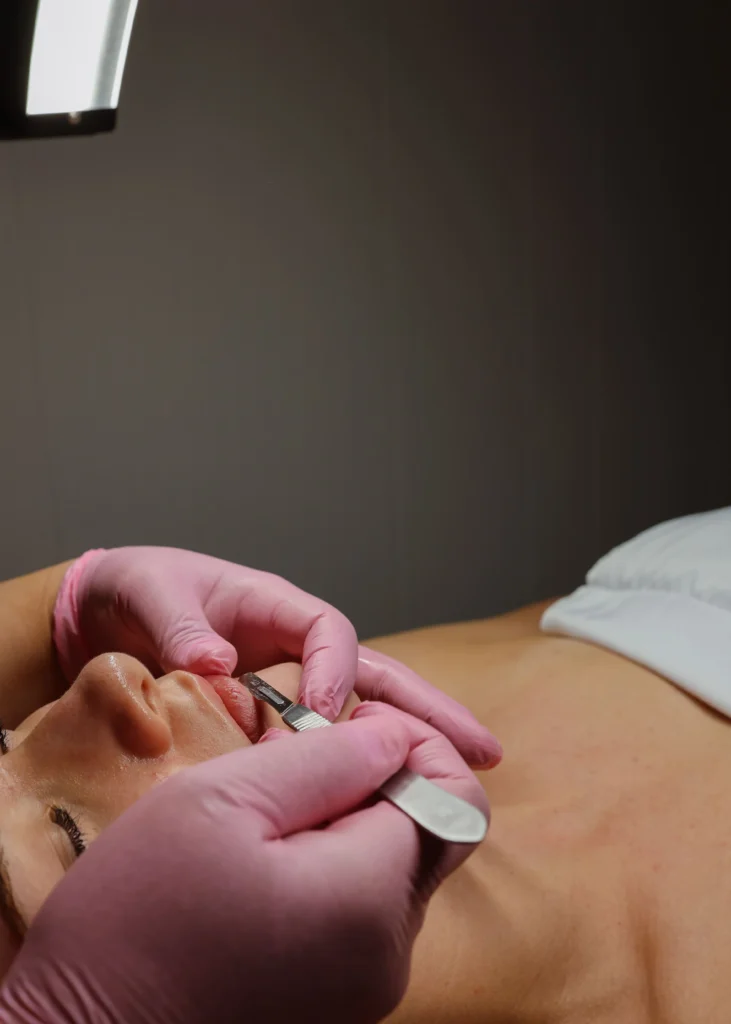
A dermaplaning session typically takes about 30 minutes. There is no numbing period beforehand and no recovery afterward, so the appointment time is the whole commitment. It is one of the few professional treatments that genuinely fits into a lunch break.
This is the question worth answering properly, because the two look similar and are not. A razor removes hair. Dermaplaning removes hair and the stratum corneum, which is the outermost layer of dead skin cells, and that second part is where nearly all the benefit comes from.
The difference comes down to the blade and the angle. A surgical blade held at roughly 45 degrees and drawn across taut skin lifts that layer away. A razor held at the angle you would use on your legs does not, which is why shaving your face leaves it smooth but not brighter. Doing it properly also means seeing what you are working on across contours you cannot easily reach in a mirror, and using a fresh, sterile blade rather than a reused one.
No. Vellus hair regrows at exactly the texture and color it was before, because cutting hair at the surface does not affect the follicle that produces it. This is the second most common concern after the shaving question, and it is worth being clear about. The hair may feel slightly different for a day or two because it has been cut bluntly rather than tapering naturally, but it grows back the same.
Cost depends on whether you are booking dermaplaning on its own or adding it to another treatment such as a facial or peel, which is how many patients have it. Current pricing is confirmed at booking or at your consultation. Payment plans are available through PatientFi and CareCredit for larger treatment plans.
Dermaplaning is not suitable over active breakouts or cystic acne, since drawing a blade across inflamed skin can spread bacteria and make it worse. It should also be avoided during a rosacea flare, over eczema or psoriasis patches, on open lesions or wounds of any kind, and during a cold sore outbreak.
If you have taken isotretinoin in the past several months, wait until you are cleared, as skin stays fragile for some time afterward. It is also not the right choice for coarse or terminal hair, which needs a different removal method. Your provider checks all of this before treatment rather than after.
There is no downtime. You can return to normal activities immediately and wear makeup the same day. Mild redness sometimes occurs and typically settles within a few hours. Freshly exfoliated skin is more sun-sensitive for several days, so daily sunscreen matters more than usual in the week afterward.
Every four weeks is the usual rhythm, which matches the skin’s natural cell turnover cycle. Treating more often does not give the surface time to renew and can leave skin sensitized. Some patients book seasonally or before events rather than monthly, which is a perfectly reasonable way to use the treatment.
Yes, and combining it with a facial or peel is how many patients have it. Clearing the dead skin layer first means the products used afterward reach living skin. Chemical peels are a slightly different case, since both are exfoliating treatments and they are usually spaced rather than performed in the same appointment. Your provider will advise on timing based on your skin.
Usually yes, and it is often a better option than chemical exfoliation for reactive skin. There are no acids and no heat involved, which removes two of the most common triggers. Active flares of rosacea or eczema should be allowed to settle first, and mentioning any history of reaction at your appointment lets your aesthetician adjust their approach.
Before treatment, pause retinoids, acids, and scrubs for three to five days, and do not come in with sunburn or a fresh tan. Afterward, wear broad-spectrum SPF 30 or higher daily, since freshly exfoliated skin burns more easily, and wait two to three days before resuming active ingredients. There is no other downtime and you can wear makeup the same day.
Dermaplaning is one of the few treatments where the result is visible before you get to your car. If you have been curious about it but unsure whether it is worth booking rather than buying a tool, 30 minutes will answer that better than anything written here.
Call 863-450-4060 or book an appointment at 2015 South Florida Ave, Lakeland, FL 33803. We are open Monday through Wednesday from 9 AM to 5 PM, Thursday from 9 AM to 6 PM, and Friday from 8:30 AM to 3 PM.
Home
About
Services
Skin
Face
Neurotoxins
Botox®
Dermal Fillers
Biostimulators
Energy & Laser
Body
Hair Restoration
Wellness
Private Injector Training
Conditions We Treat
Treatments By Decade
Treatments By Body Area
Signature Treatments
Blog
Rewards
Before & After
Shop
Payment Plans
Memberships
Contact